How to Choose a Desk for a Small Room
The wrong desk size is one of the most common and most expensive mistakes in a small UK home office. This guide covers what to measure, what dimensions work in practice, and how to choose a desk that fits the room without making it feel smaller.
Measure twice, order once. The most important step in choosing a desk for a small room is measuring the available wall space — including how much clearance you need behind the chair — before you look at any desk listings.
Step one: measure your space properly
Before you look at any desks, measure these three things: the width of the wall the desk will sit against, the depth of the space from the wall to where the chair will be, and the ceiling height if you plan to add shelving above. Maximising your wall space is key, so consider optimising space with smart storage ideas to keep the desk surface clear.
For chair clearance: you need at least 60cm behind the desk for a standard chair to push back comfortably. In a small room, this is often the limiting factor — not the desk itself. Work backwards from the room depth to know your maximum desk depth before anything else.
The dimensions that matter
Width: 100–120cm for most small rooms
Enough for a monitor, keyboard, and a notebook. Under 80cm feels cramped. Over 140cm starts to dominate a small room. The 100–120cm range is the practical sweet spot for UK flats and spare rooms.
Depth: 55–60cm for monitor-based setups
60cm gives a comfortable distance from monitor to face for a 24–27 inch screen. 55cm works with a monitor arm. 45cm is workable for laptop-only setups. Anything over 70cm only makes sense for multi-monitor builds.
Height: 72–75cm standard
Most desk surfaces are 72–75cm high, designed for chairs adjusted to matching height. If you use a sit-stand desk or are particularly tall or short, check the height range of any adjustable desk before buying. For standard use, fixed-height desks in this range work for most people.
Frame clearance: check under-desk depth
If you plan to add an under-desk cable management tray or drawer unit, check the internal frame clearance at the front of the desk. Some desks with crossbar frames at leg height prevent tray installation. Look for clean, open leg frames on desks you intend to add accessories to.
Which desk shape works best
Straight desk — the best choice for most small rooms
A simple straight desk (rectangle) fits along one wall, is easy to cable manage, and leaves the rest of the room open. It is the right choice for the majority of small UK home offices. Almost every minimal setup you see is built on a straight desk.
Corner/L-shaped desk — only if you genuinely need two surfaces
Corner desks solve a specific problem. If you need a second monitor, a drawing tablet, or a separate writing surface, an L-shaped desk makes sense. In a small room where you only need one working surface, a straight desk with a floating shelf above is almost always the better choice.
Floating wall desk — ideal for very small rooms
A wall-mounted floating desk folds flat when not in use and takes up minimal space. The best option for box rooms, alcoves, and bedroom corners where floor space is genuinely limited. For layout options and placing a desk in your sleeping area, see our guide on bedroom home office configurations. Most floating desks are between 80–100cm wide, which works for laptop setups but is tight for external monitors.
Materials and finishes
The material of the desk surface affects durability, how easy it is to clean, how it looks in the room, and how well it works with a desk mat.
White laminate — the safe, versatile choice
Works in almost any room, shows the desk mat and accessories clearly, easy to keep clean. The most common choice for minimal setups because it disappears into the background. Some white desks yellow slightly over time — check reviews before buying.
Light wood or bamboo — warm and premium-looking
A light oak or bamboo surface looks warmer and more premium than white laminate. Works especially well in living room or bedroom setups where a clinical white desk would look out of place. Costs slightly more but makes a significant visual difference.
Black — for gaming and dark-palette setups
A matte black desk surface works well in gaming setups and rooms with dark decor. Shows dust and fingerprints more than light surfaces. Pairs well with black accessories and a black chair for a cohesive look.
What to avoid in a small room
Hutch desks with built-in shelving above the surface
These look impressive in large home offices but feel oppressive in small rooms. They block light, create visual weight at eye level, and limit how you can use the wall above the desk. A floating shelf mounted separately is far more flexible.
Glass desks
Glass shows every fingerprint, cable shadow, and dust particle. In a small room where cables are harder to hide, a glass surface will always look messier than a solid surface — even when the desk is technically clean.
Desks without cable management options
Some desks have frame designs (particularly crossbar frames at leg level) that prevent you from adding a cable tray later. Always check the underside of a desk before buying if cable management is a priority.
Ready to see specific desk recommendations?
The minimal desk setup guide includes a full shoppable list of desk recommendations for small rooms, sized for UK spaces and linked to Amazon UK.
View the desk guide →FAQ
For most small UK rooms, a desk between 100cm and 120cm wide is the right size. It fits a monitor, keyboard, and notebook without dominating the space. Under 80cm feels cramped for daily computer work. Over 140cm starts to dominate a small room unless the room is specifically arranged around it.
A depth of 50–60cm is sufficient for most home office setups. 60cm gives comfortable distance between the monitor and your face. If you use a laptop without an external monitor, 45cm is workable. Deeper desks (70cm+) are only necessary for multi-monitor builds or dual-screen setups.
Not usually. L-shaped desks solve a specific problem — needing two working surfaces — but in small rooms they often consume too much floor space. A straight desk with a floating shelf above it provides more useful surface area with a smaller footprint.
MDF with a laminate surface (white, light grey, or light wood) is the most practical choice for most UK home offices — it is inexpensive, easy to clean, and looks good in photos. Solid wood is more durable and looks premium but costs significantly more. Glass desks are difficult to keep clean and show every smudge and cable shadow.
Shop desks for small UK rooms — all on Amazon UK
Chosen for the exact size range covered in this guide. Affiliate links — we earn a small commission at no extra cost to you.
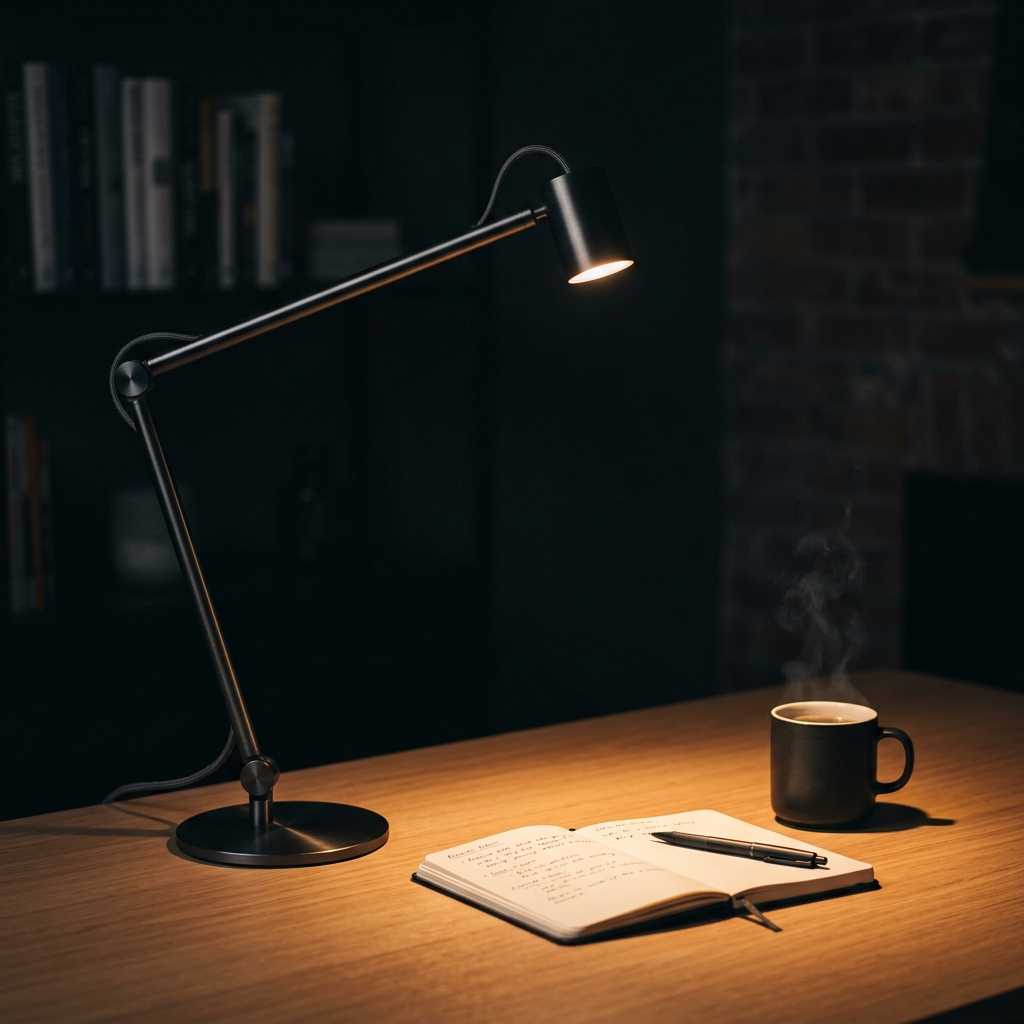 Best all-rounder
VASAGLE 100cm Computer Desk — White or Light Wood
100cm wide, 50cm deep, clean metal legs with no crossbars. Fits most UK spare rooms. The most recommended desk in this size range for good reason — very easy to cable manage.
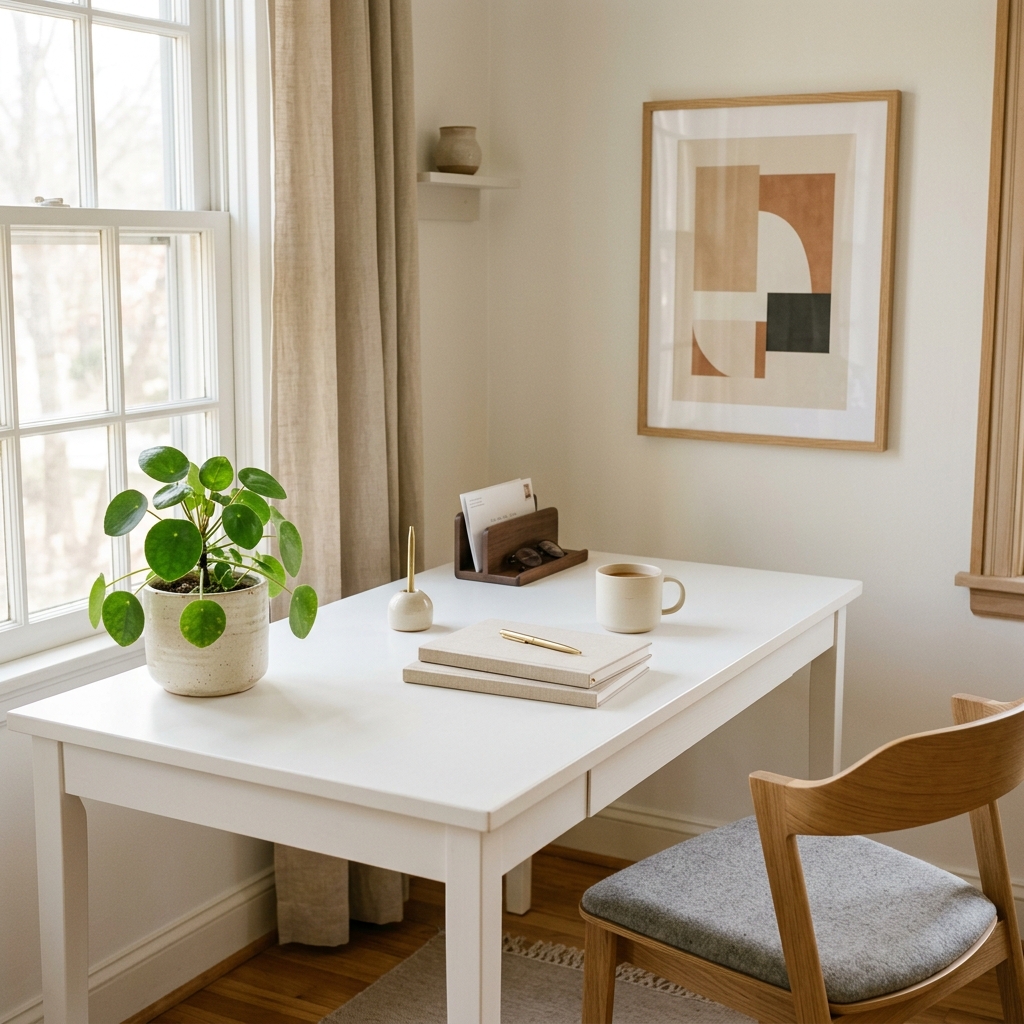 Warmth upgrade
Solid Bamboo Desk 100cm — Natural Surface
The visual upgrade over white laminate. A natural bamboo surface is warmer, more premium-looking, and works in living rooms and bedrooms where a clinical white desk would look out of place.
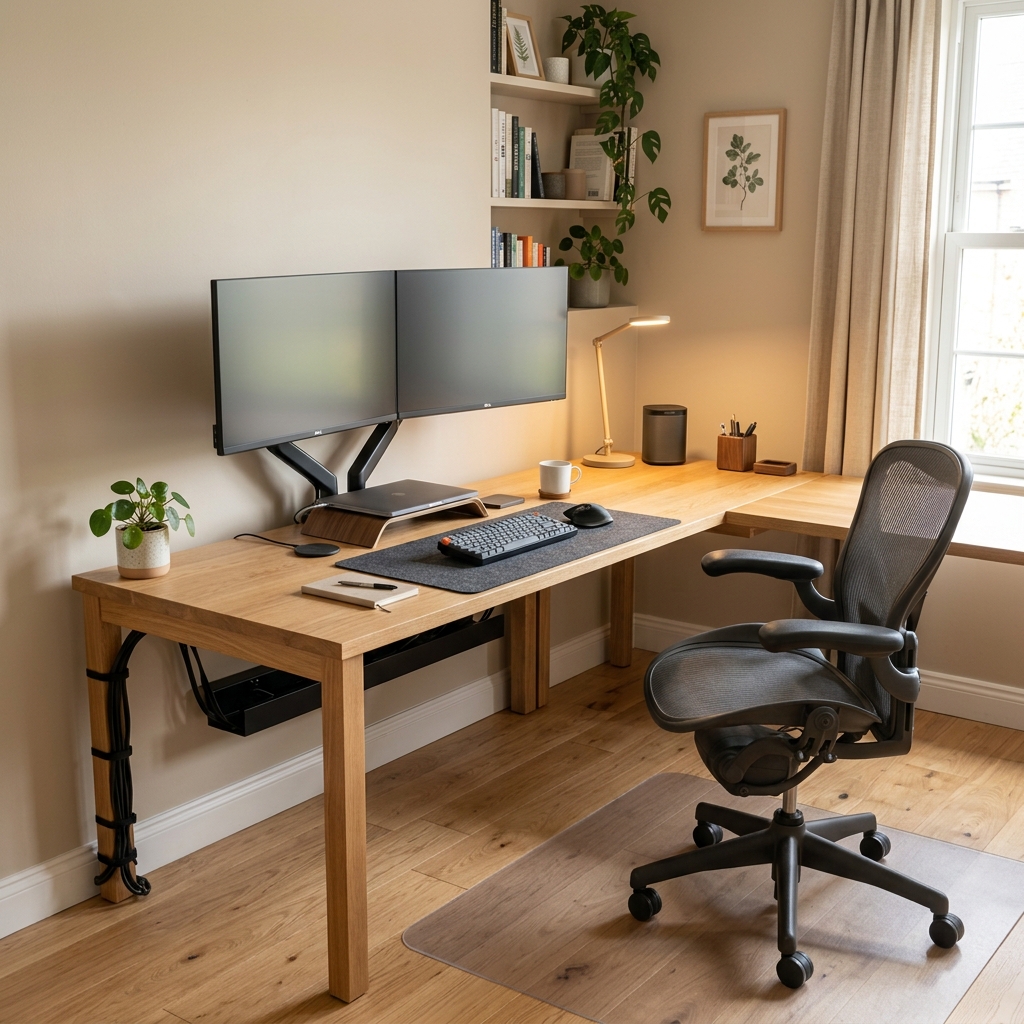 Box rooms
Floating Wall Desk — Folds Flat When Not in Use
For rooms where a standard desk cannot fit. Mounts on the wall, folds completely flat, and disappears when not in use. 80–90cm when open — enough for a laptop or one external screen.
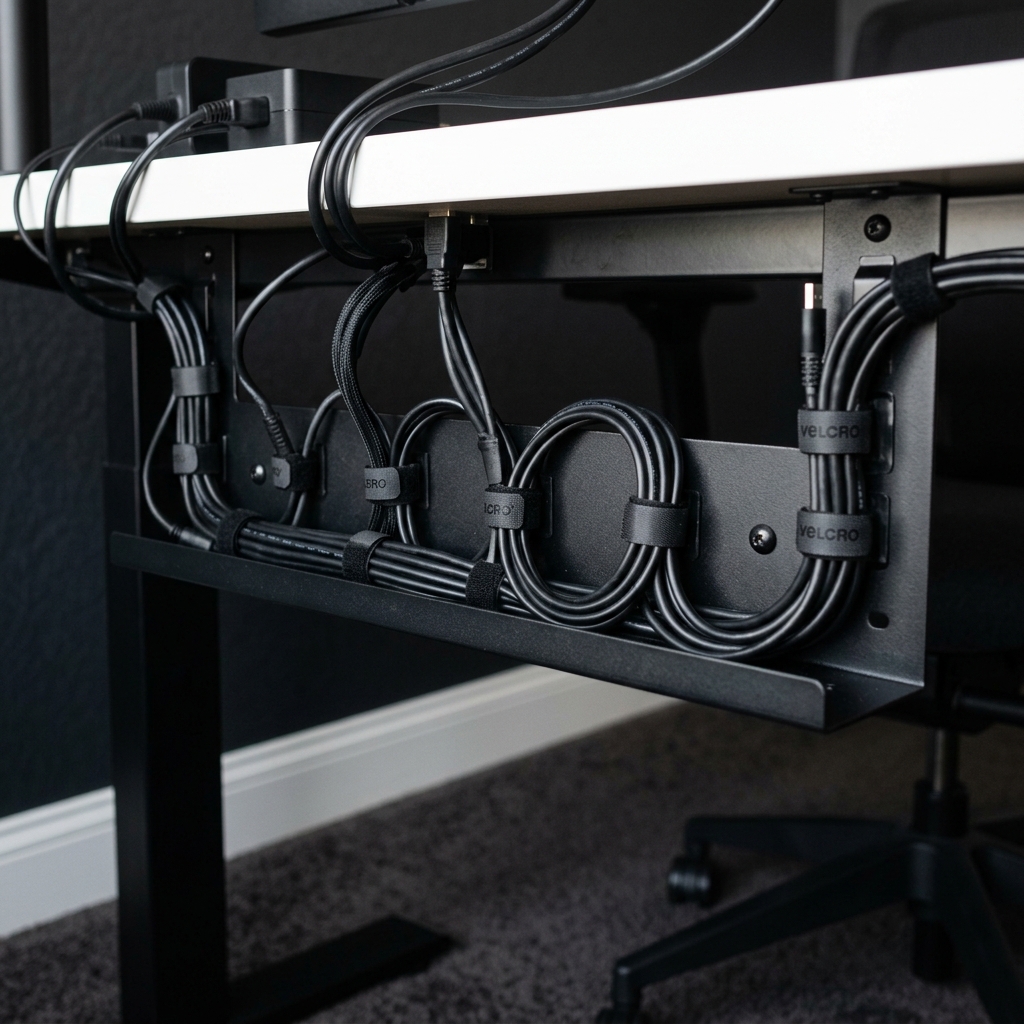 Do this first
Under-Desk Cable Management Tray
Do this before adding any other accessory. Clamp-on, under the desk, hides the power strip and all bulk cables. The single biggest visual improvement in any setup regardless of desk size.
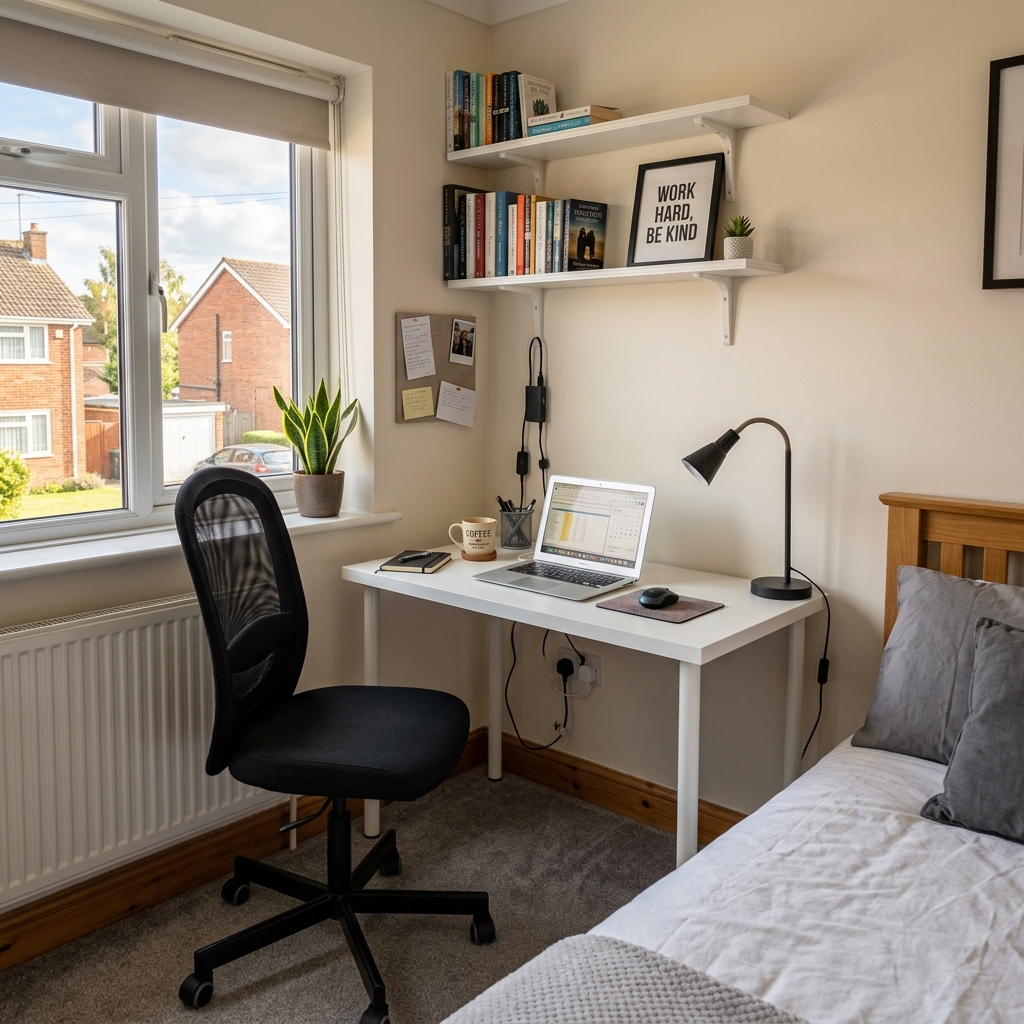 Maximum surface
120cm Desk — When You Need the Extra Width
For setups with two screens, a drawing tablet, or a keyboard plus writing space. 120cm gives dual-monitor room without the corner desk footprint. Still fits most UK spare rooms side-on.
Related guides
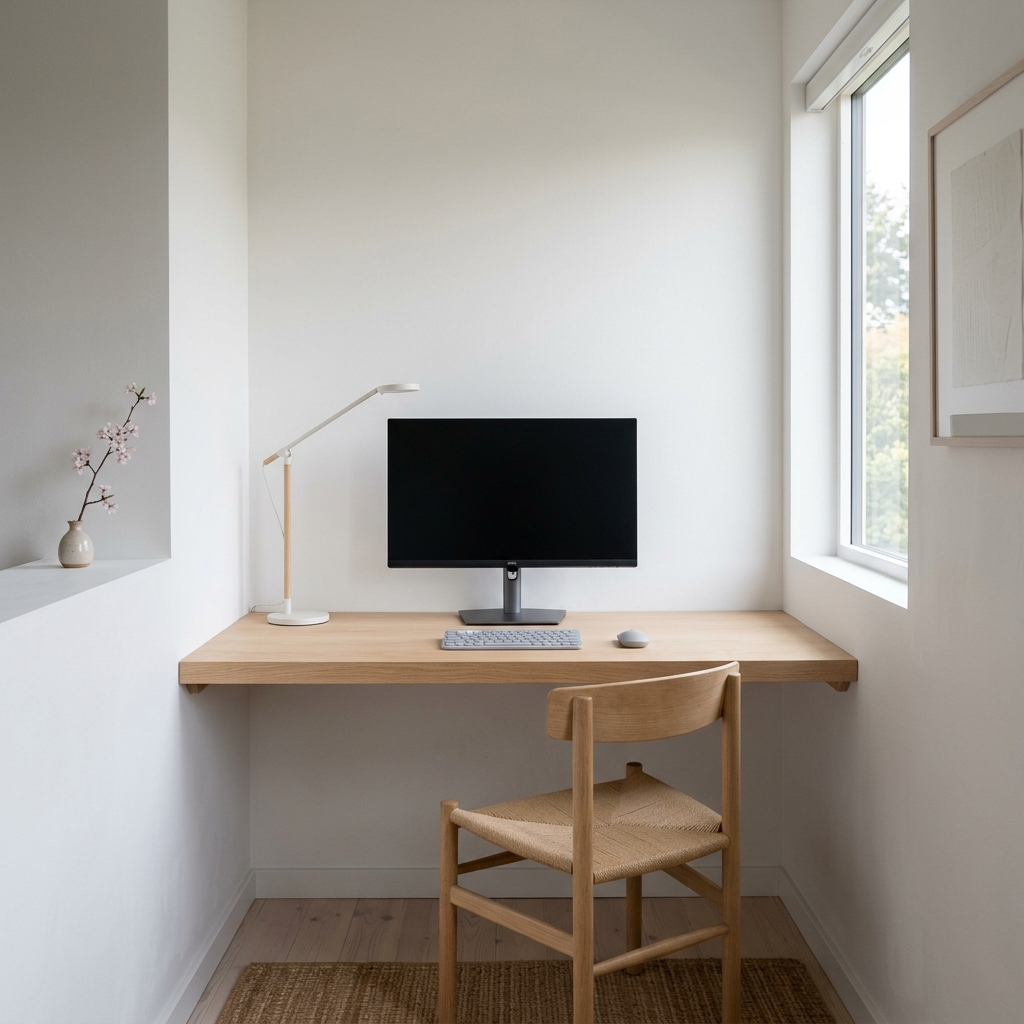
Minimalist Desk Setup Ideas UK
The principles behind a genuinely minimal desk — palette, products, and what to leave out.
Read →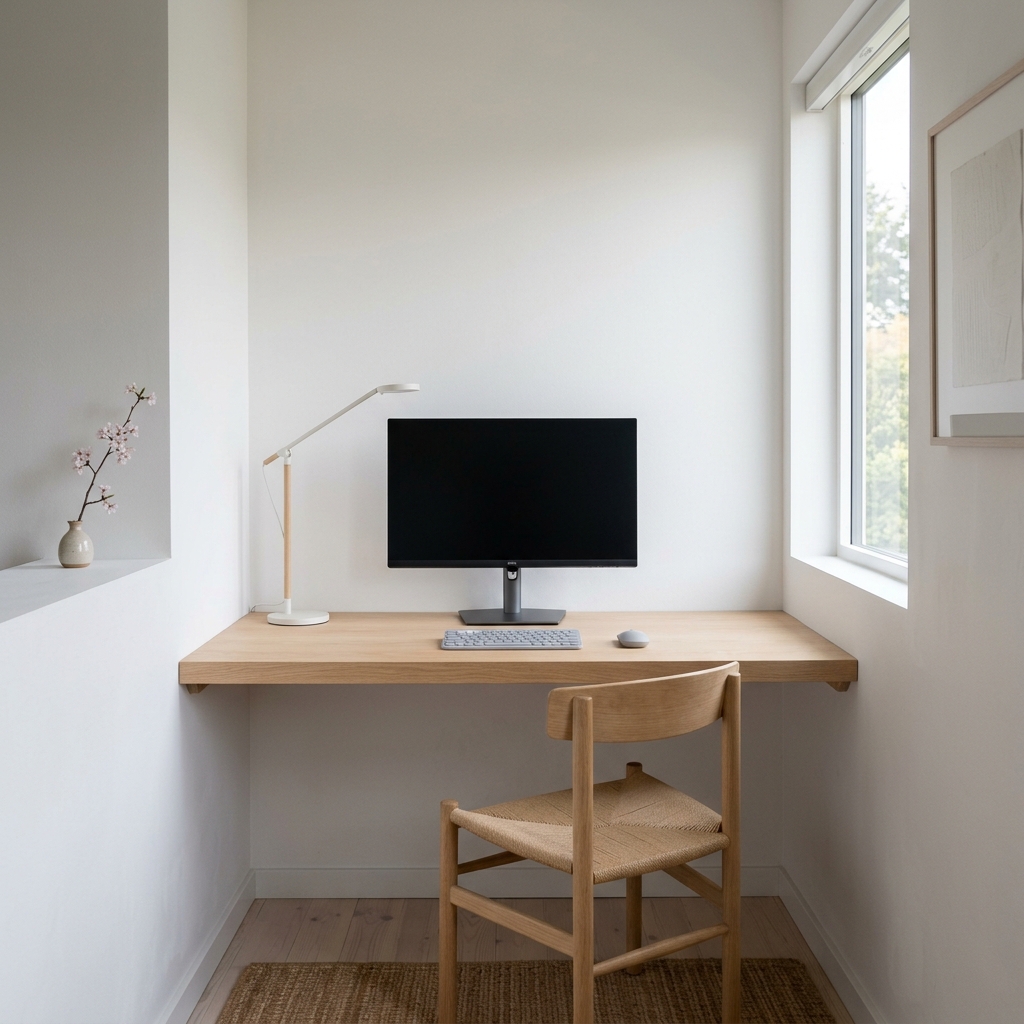
Minimal Desk Setup for Small Rooms
The complete shoppable guide — desk, chair, lamp, accessories. All on Amazon UK.
Read →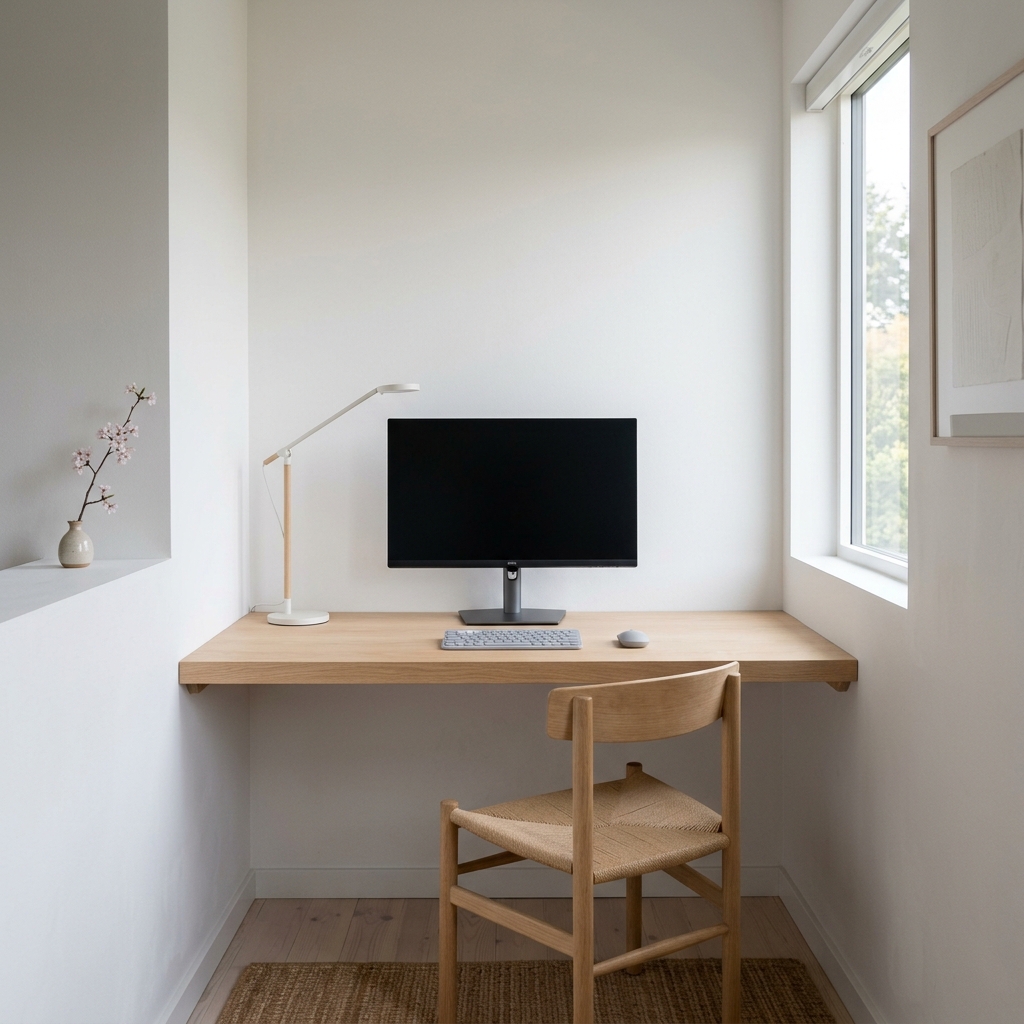
Best Desk Layout for Productivity
How to arrange your desk for maximum focus and minimum friction.
Read →