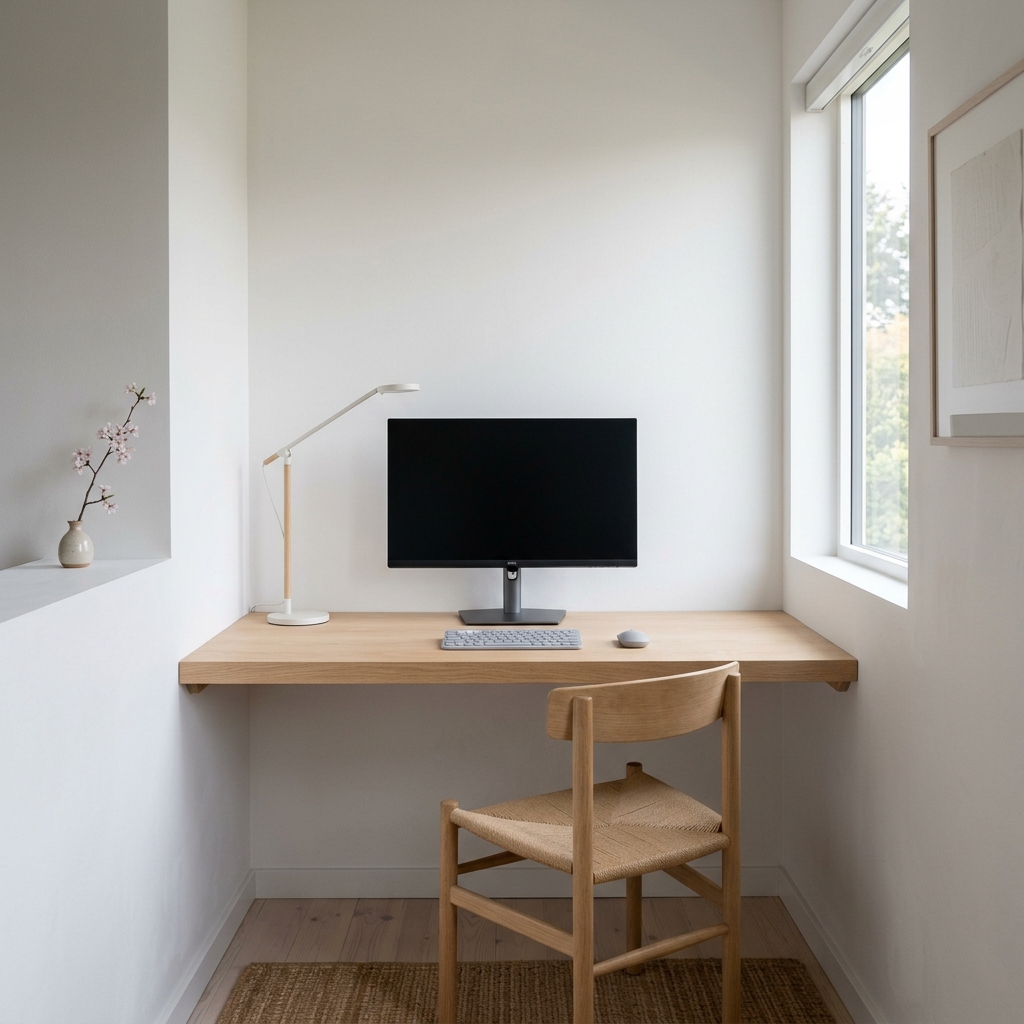
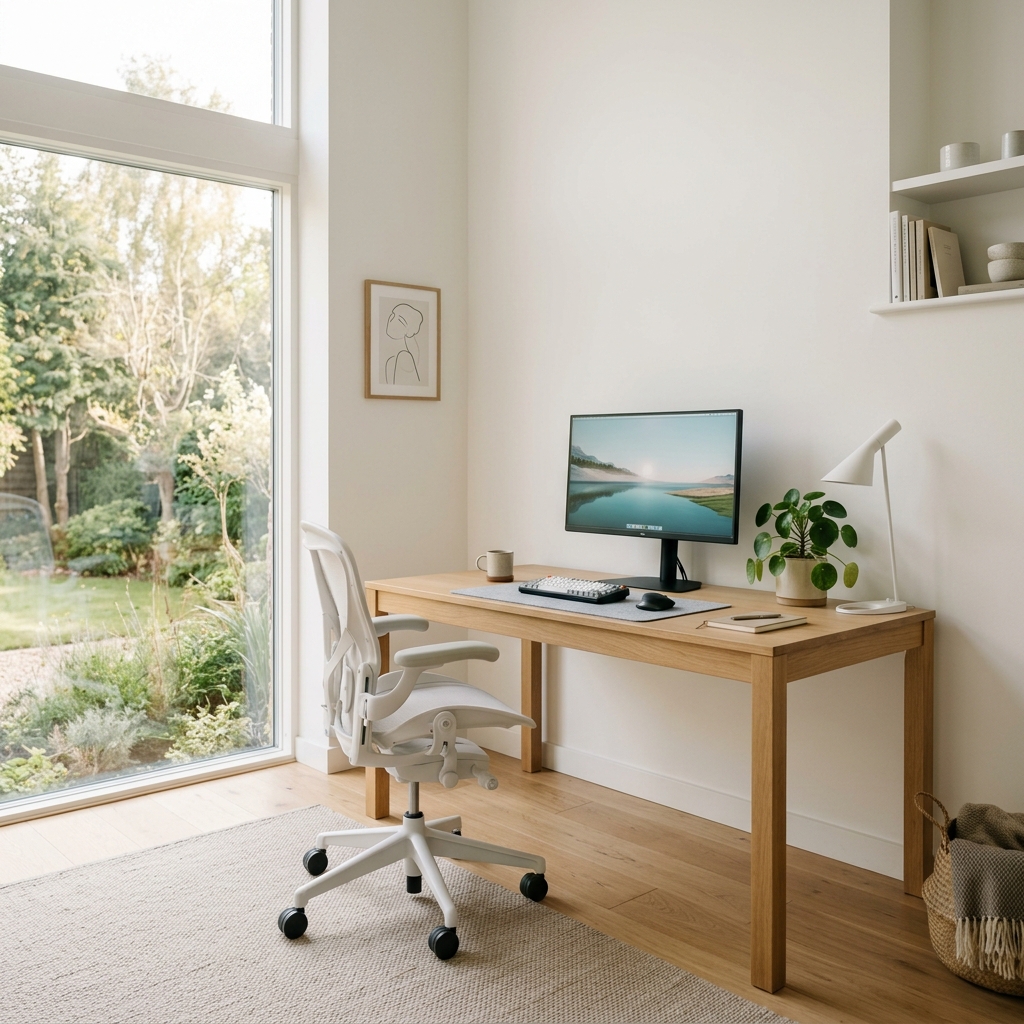
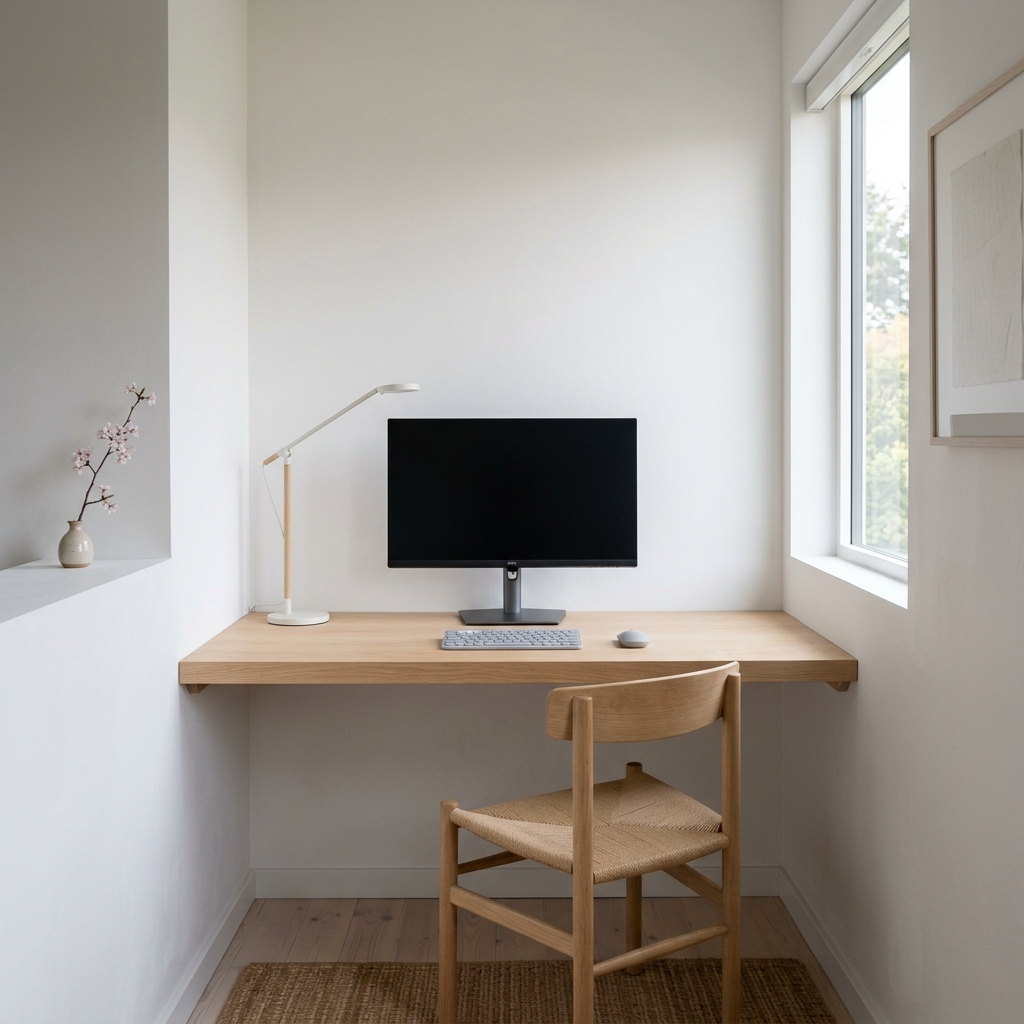
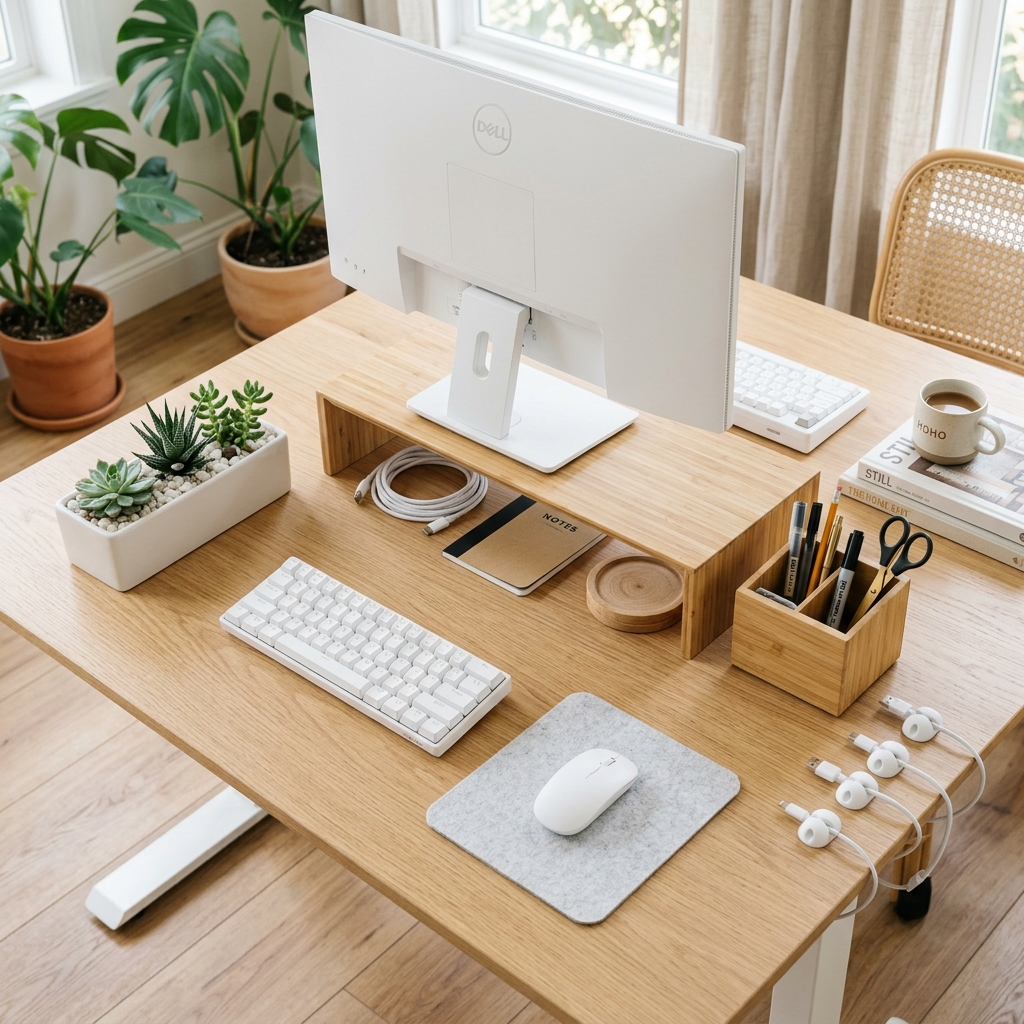
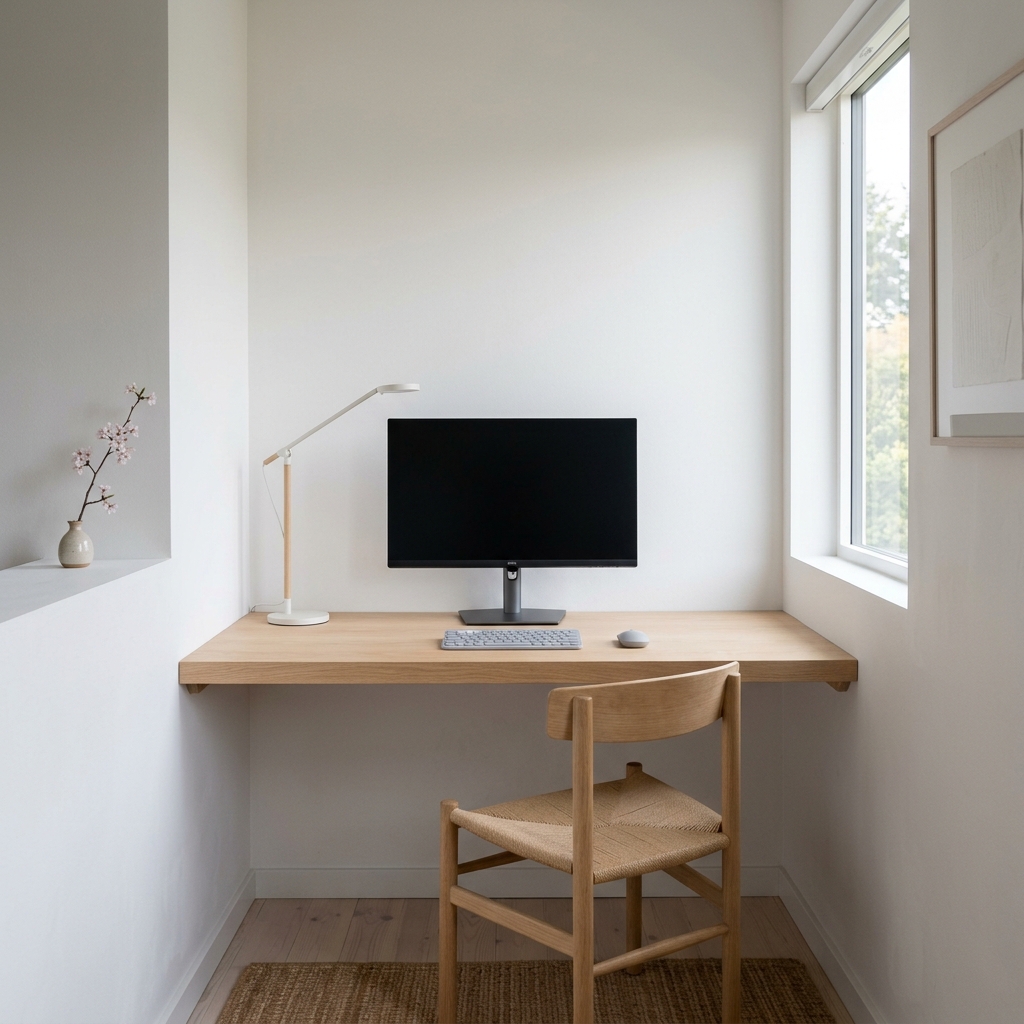
How to layer lighting to make a workspace feel warm, focused, and genuinely comfortable. Desk lamps, bias lighting, and ambient setups curated for UK home offices — all linked to Amazon UK.
A well-organised desk in a badly lit room still feels cold and clinical. Lighting is the single most underrated factor in how a workspace actually feels to spend time in — more than the desk itself, and more than any decor you add to it.
In most UK homes, the default is a single overhead ceiling light. This creates flat, shadowless illumination that feels utilitarian, not comfortable. Add north-facing windows, east-facing rooms that go dark by 2pm in autumn, and the grey British winter that runs from October through March — and lighting becomes not just an aesthetic choice but a practical wellbeing decision for remote workers.
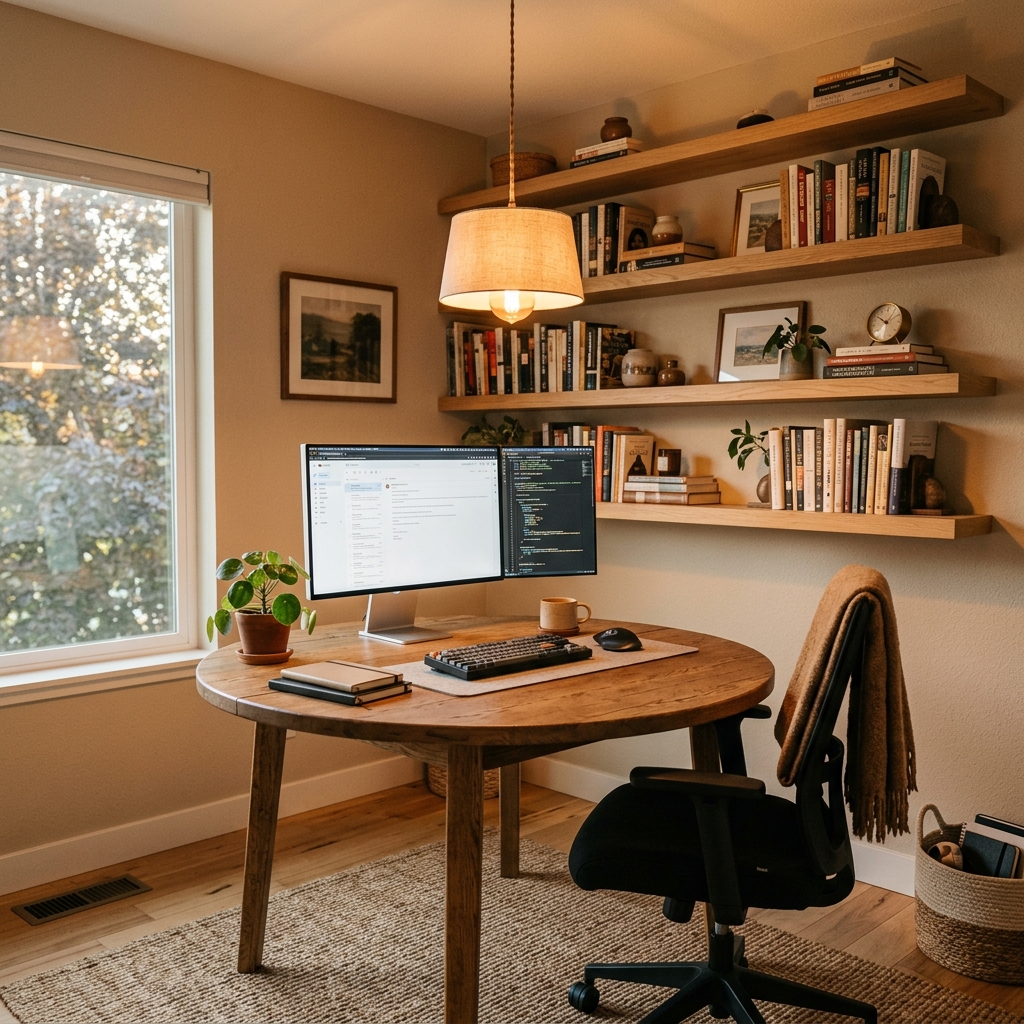
The solution is layering: combining a focused task light on the desk with warm ambient light in the room, and optionally a daylight lamp for low-light seasons. This guide covers all three.
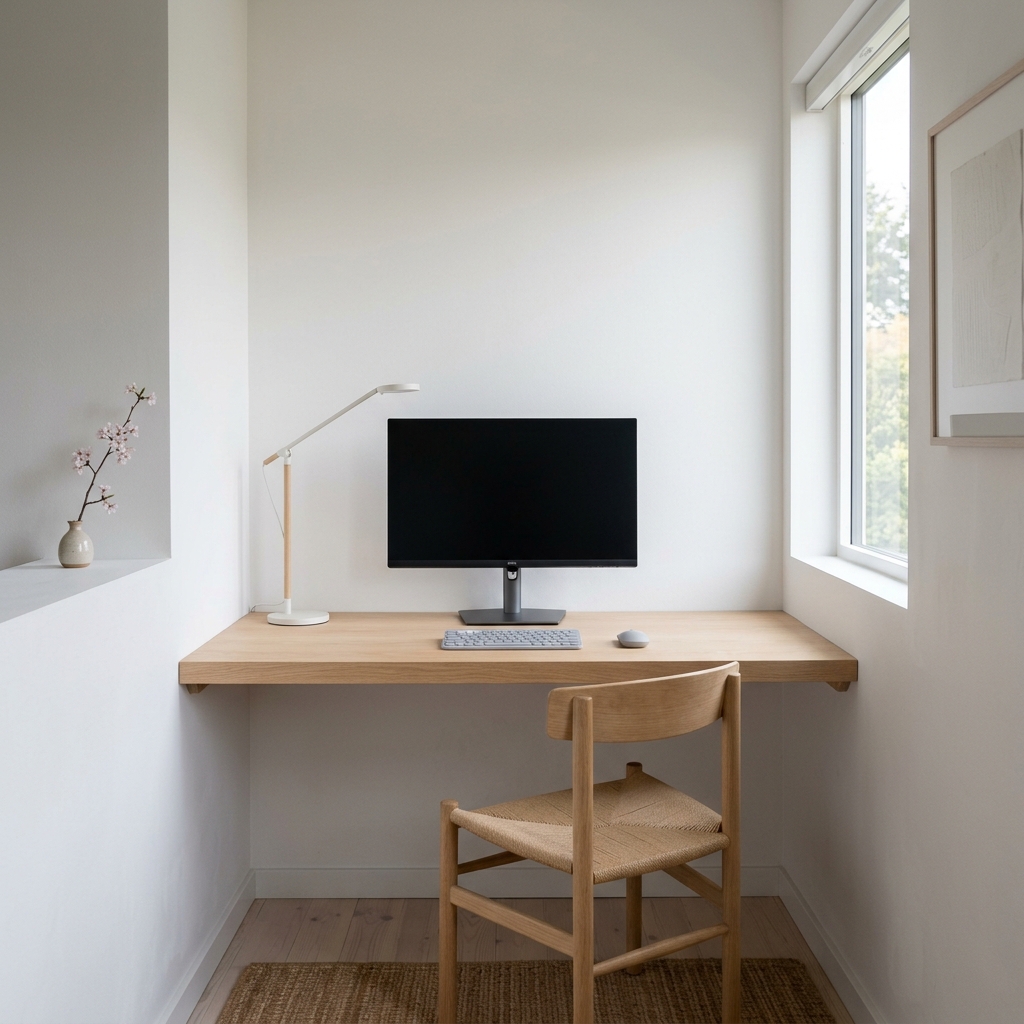
Task lighting is the highest priority for your eyes and focus. An adjustable brightness and color temperature lamp is ideal. Read our buying guide on the best desk lamps in the UK to find options that minimize screen glare and look great on your desk.
Decorating a small workspace is about curation, not clutter. Simple touches like adding natural plants, prints, and cohesive palettes make a room feel warm and professional. Explore our desk decor and styling ideas to style your workspace beautifully.
Soft textures and balanced lighting layers can completely change how a room feels during long work hours. Learn the exact process in our how-to guide on tactile styling and warm lighting to make your home office invite focus.
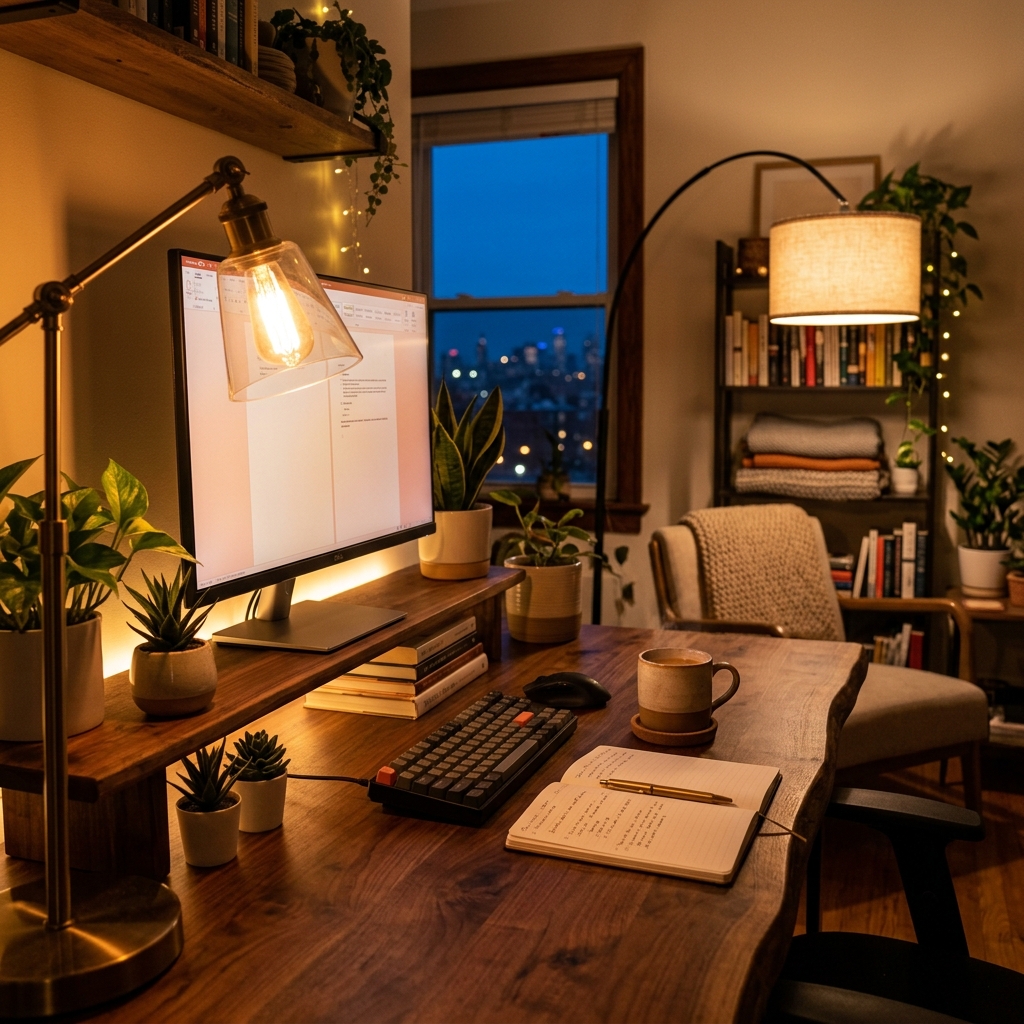
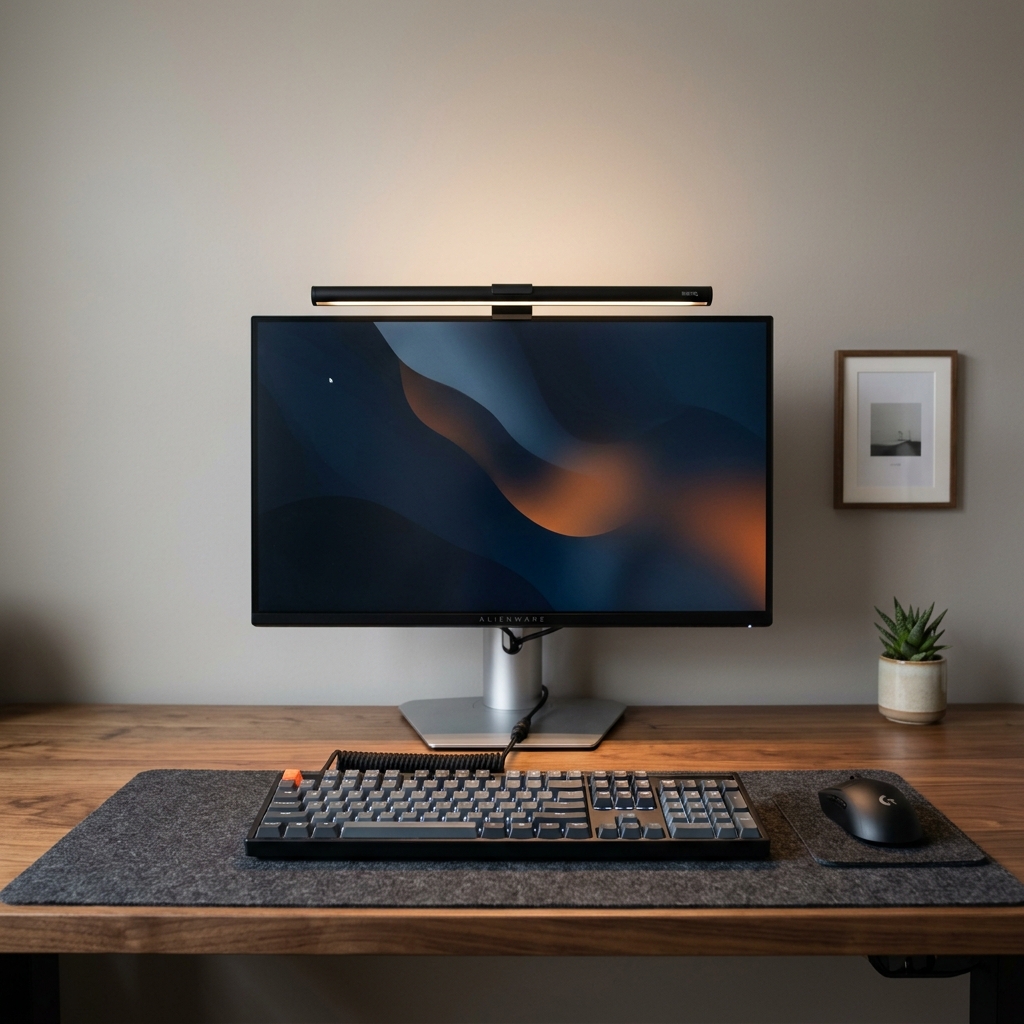
The fastest upgrade: Turn off the main ceiling light and add a warm white (2700K) LED strip behind your monitor. The contrast reduction instantly makes the room feel warmer and reduces eye strain in the evenings.
If you want specific product recommendations with Amazon UK links, see our comprehensive cozy home office lighting guide covering task lamps, monitor light bars, and ambient LED strips.
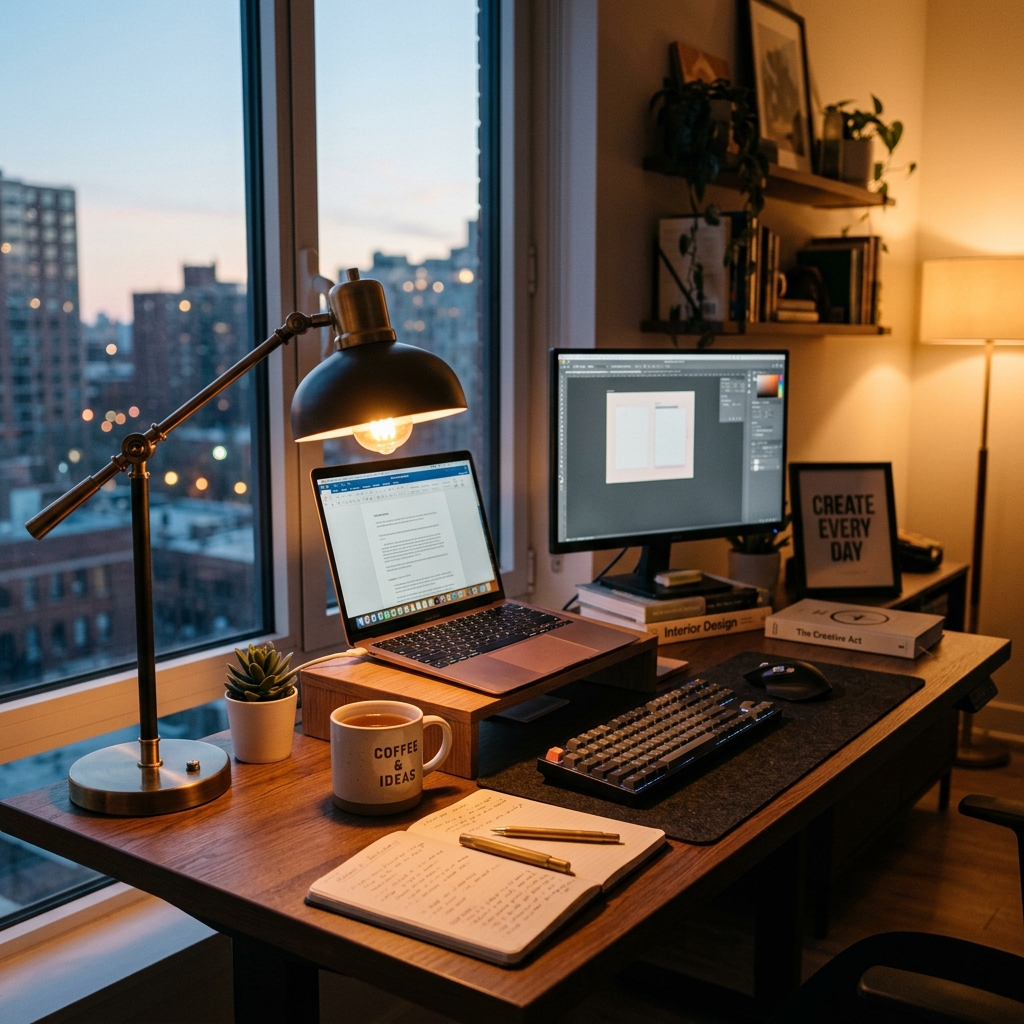
Desk lamps, bias lighting, and ambient glow. The specific products needed to layer light correctly.
Read the full guide →See how lighting fits into a complete, clean desk setup for a compact UK room.
View setup →A complete office build on a budget, including the right affordable desk lamp.
View budget guide →Desk lamps and monitor light bars that illuminate the working surface without causing screen glare.
Check prices on Amazon UK →LED strips behind the monitor and small floor lamps to add warmth and reduce contrast.
Check prices on Amazon UK →Adding rugs, plants, and natural materials to absorb sound and soften the visual feel of the room.
Read guide →How to position your desk relative to the window to maximise daylight and minimise screen glare.
Read layout guide →Practical changes to lighting, texture, and layout that transform a cold room into a warm workspace.
Read guide →Includes specific advice on where to place your desk relative to windows and natural light sources.
Read guide →Keep the desk clear so your chosen lighting and decor actually stand out instead of adding to the clutter.
Read guide →What to look for, which features matter, and the specific lamps worth buying from Amazon UK.
Read →Colour palettes, plants, prints, and finishing touches for a workspace that looks and feels premium.
Read →The specific changes to lighting, texture, and layout that transform any workspace atmosphere.
Read →Layer three types: task lighting (a desk lamp pointed at your work), ambient lighting (a floor or table lamp for general room brightness), and optionally a bias light behind the monitor to reduce eye strain. The desk lamp is the highest priority — it directly affects how easy it is to focus and how the setup photographs.
A lamp with adjustable colour temperature (2700K–6500K) gives you maximum flexibility. Use warmer tones (2700K–3500K) for calm, focused work sessions and cooler tones (5000K–6500K) for video calls and detail work. If you can only choose one, 4000K (neutral white) is the best all-rounder for a home office.
A desk lamp between 400 and 800 lumens is sufficient for most home office tasks. Higher lumen output is useful for detailed work or if your room has very limited natural light. Look for a lamp with dimming control so you can adjust brightness to the time of day and task.
For video calls, even light on your face is important. Position your desk facing a window for the best natural lighting, or use a ring light or a secondary lamp placed at screen height facing you. Overhead ceiling lights cast shadows and are the worst light source for video calls.
Bias lighting is a light source placed behind the monitor that illuminates the wall behind the screen. It reduces the contrast between the bright screen and the dark room, which reduces eye strain during long sessions. It is not essential but is a worthwhile upgrade for people who work 6+ hours on screen. LED strips designed for this are inexpensive and available on Amazon UK.