How to Set Up a Home Office in a Bedroom
Working from a bedroom is one of the most common home office situations in the UK. Done well, a bedroom desk setup is calm, productive, and does not interfere with sleep quality. Done poorly, it makes both work and rest harder. This guide covers the specific decisions that make the difference.
The most important rule: Do not put the desk opposite the bed. Seeing your desk from the bed means the last thing you see before sleeping and the first thing you see when waking up is work. If the room layout allows any alternative, take it.
Desk position in the bedroom
Best: facing a wall, not visible from the bed
A desk against a wall — particularly an alcove, a corner, or the wall beside or behind the door — keeps the desk out of the direct sightline from the bed. This is the most important positioning decision in a bedroom home office.
Good: facing a window, to the side of the bed
A desk positioned beside the bed (facing a window if one is there) works well in rooms wide enough to allow it without feeling cramped. The natural light improves working conditions and the desk is not directly visible from the bed.
Acceptable: with a visual divider
If the only available wall is opposite the bed, use a bookcase, room divider screen, or tall plant as a visual barrier between the desk and the sleeping area. This is not ideal but meaningfully reduces the psychological impact of seeing the desk from the bed.
Avoid: directly facing the bed
A desk directly in the sightline from the bed reinforces the association between the bedroom and work, which research consistently links to poorer sleep quality. If there is genuinely no other option, use a curtain or decorative screen that can fully cover the desk at the end of the working day.
Bedroom office lighting
Bedroom lighting for sleep — warm, dim, indirect — is the opposite of ideal task lighting for work. A bedroom home office needs two distinct lighting modes: bright, cool-toned task light for working hours, and warm, dim ambient light for evening relaxation.
A desk lamp with adjustable colour temperature handles this well: cool (5000K+) during working hours, warm (2700K) in the evening. Position the lamp so it lights your work surface without affecting the bed area.
Work-rest separation strategies
End the working day with a physical shutdown
At the end of each working day, tidy the desk surface completely, close all applications, and if possible, turn the monitor off and face it away from the bed. The physical act of closing down reinforces the psychological transition from work mode to rest mode.
Use a visual cover for the desk
A fabric panel, a decorative screen, or even a large plant can cover the desk and its equipment from view in the evening. Out of sight, out of mind applies genuinely when it comes to desk-bedroom sleep interference.
Keep the desk area separate in how you decorate
Give the desk area a slightly different visual treatment — different wall colour, a piece of art that is work-oriented, a rug under the chair — that signals it is a different zone from the rest of the bedroom. This mental separation matters more in practice than it sounds in theory.
Build the complete bedroom home office
The minimal desk setup guide covers all the products for a clean, compact desk in a small room — bedroom-appropriate and linked to Amazon UK.
View the setup guide →FAQ
Research on sleep hygiene suggests that maintaining the bedroom as a sleep-only space can improve sleep quality. In practice, the impact varies significantly between people. The most important mitigation is desk position (not visible from the bed), a physical shutdown routine at the end of the working day, and using warm, dim lighting during evening hours.
A desk of 100–120cm wide and 55–60cm deep fits in most UK bedrooms without feeling cramped. A wall-mounted floating desk (80–100cm wide) is a good option if floor space is very limited — it folds flat when not in use and has virtually no floor footprint.
Position the desk so it is not visible from the bed if possible. Use a room divider or bookcase between the two zones. Use different lighting — task light for working, warm ambient light for evenings. Cover the desk and screen at the end of the working day. And keep the desk tidy — a cluttered desk in the bedroom is more visually intrusive than a tidy one.
Related guides
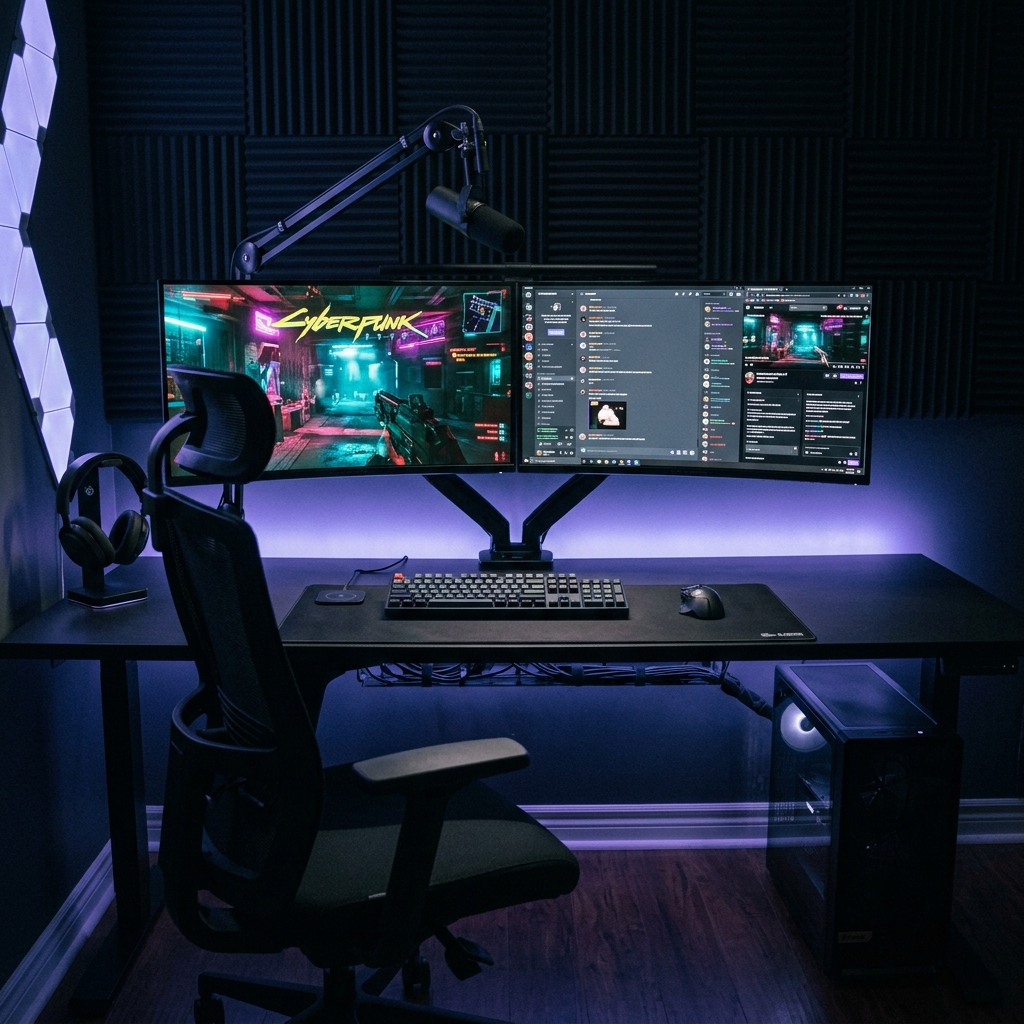
Small Home Office Ideas UK
Layout ideas and inspiration for home offices across different room types.
Read →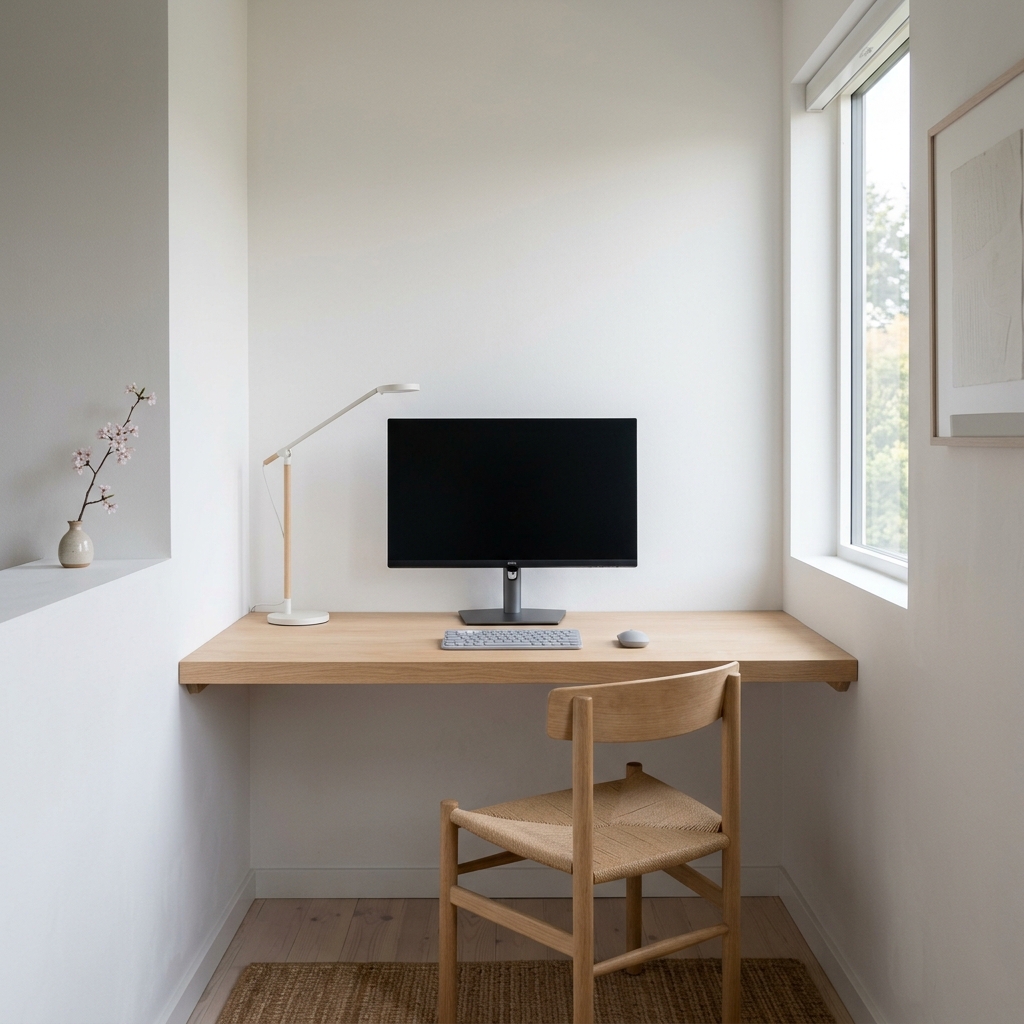
How to Make a Home Office Feel Cosy
The lighting, texture, and layout changes that make a workspace feel calm.
Read →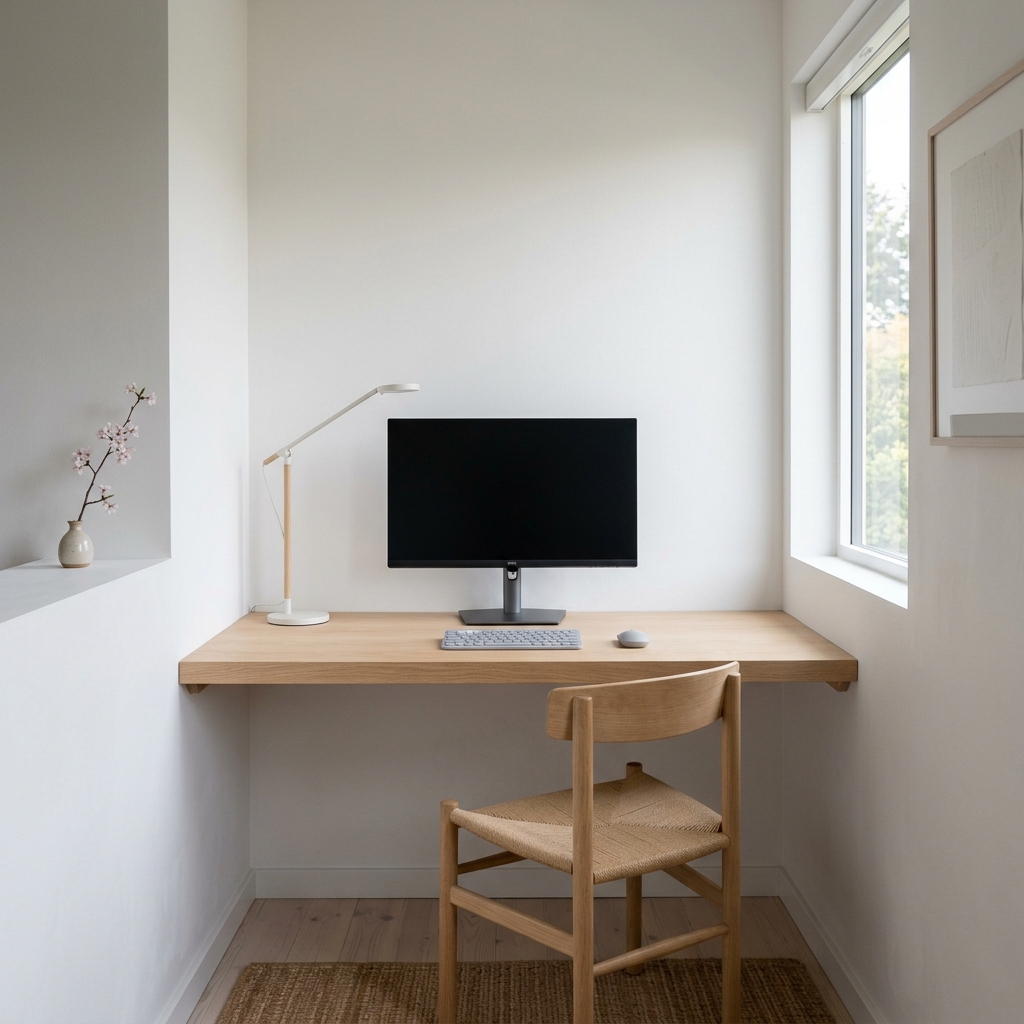
Minimal Desk Setup for Small Rooms
The complete shoppable guide for a compact desk in any small room.
Read →