How to Keep a Desk Tidy Long-Term
Getting a desk tidy is easy. Keeping it tidy is the hard part — and it is almost never about willpower. It is about designing a setup where order is the default state, and implementing two simple maintenance habits that take less than five minutes combined.
The real reason desks get messy: Items do not have a designated home. When something does not have a specific place it belongs, it lands on the nearest flat surface — which is usually the desk. The fix is always about system design, not discipline.
Why desks get untidy again
The desk is being used as a staging area
When items arrive (post, books, shopping bags, cables from other rooms), they land on the desk because it is a convenient flat surface. The desk then becomes an overflow storage zone by default. The fix is to create a specific "incoming" tray or box elsewhere — not on the desk — for things that have not yet been dealt with.
Cables are not managed
Unmanaged cables create the visual impression of clutter even when the desk is otherwise tidy. Cable management is infrastructure — once it is done, the desk looks significantly cleaner with no further effort. See the cable management guide for the specific products that make this straightforward.
Too many items have the desk as their home
If the desk holds 30 items and you use 5 of them daily, 25 items are on the surface unnecessarily. The most effective desk-tidying intervention is almost always removal — not buying more organisation accessories.
The surface rules
A tidy desk needs a clear rule about what is allowed on the surface. The most effective rule is: only items used every single working day belong on the desk surface.
Daily items — desk surface
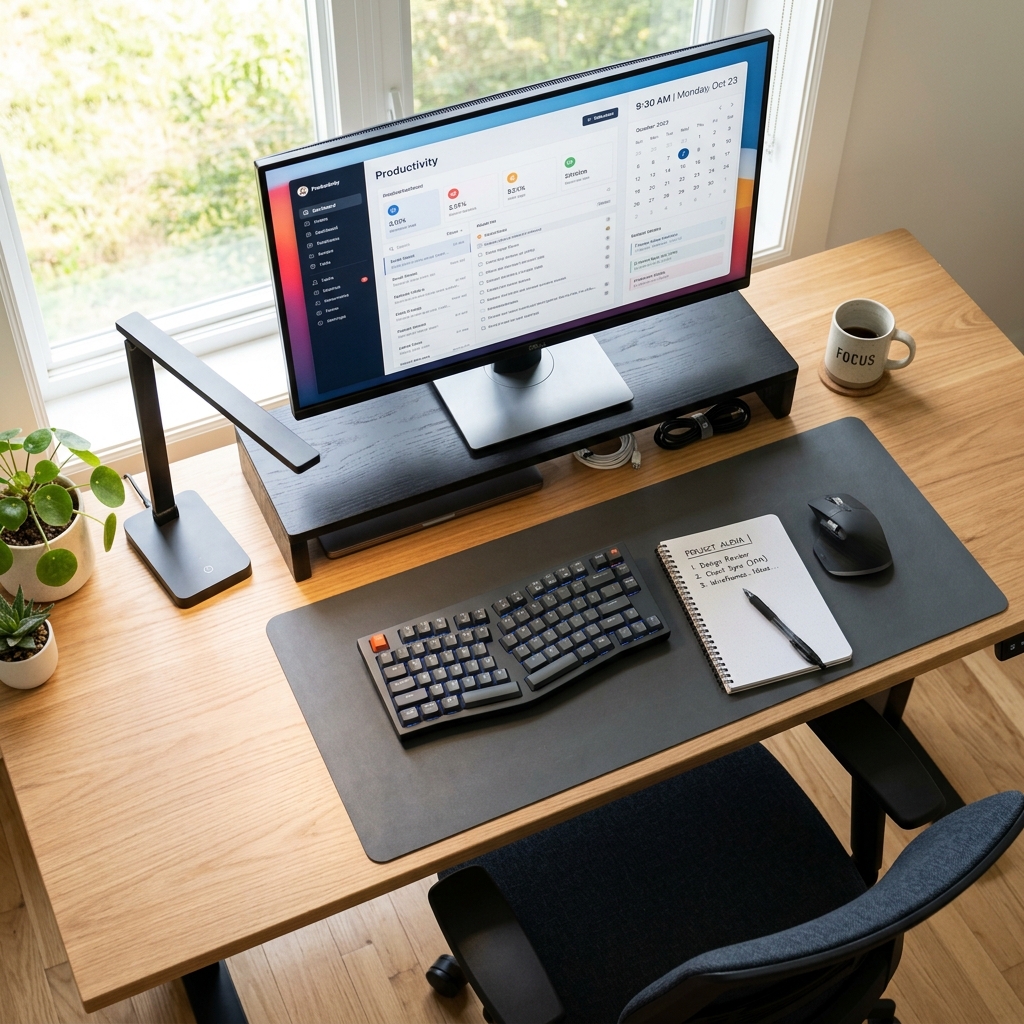
Monitor, keyboard, mouse, desk lamp, one notebook if used daily. These items earn their surface space through daily use. Nothing else qualifies automatically.
Weekly items — drawer or box
Items used once or twice a week (USB drives, specific chargers, reference books) belong in a drawer or a box near the desk, not on the surface. Accessible, but not cluttering the working area.
Occasional items — stored elsewhere
Items used monthly or less belong in a cupboard, shelf, or box that is not the desk. If in doubt about whether something should be on the desk, the answer is almost always no.
The two-minute daily tidy
At the end of each working day, do this before leaving the desk:
Return everything to its home
Any item that moved during the day goes back to its designated place. Notebook back to the shelf. Pen back to the tray. Cable back behind the monitor stand. Two minutes, done.
Clear anything that arrived
Any item that arrived on the desk during the day (post, shopping, random objects) goes to an appropriate home — not the desk. If it needs to be dealt with, put it in an "action required" tray elsewhere. Do not let it live on the desk.
Close all open tabs and apps
End the day with a clean computer screen as well as a clean physical desk. The habit of closing everything down reinforces the psychological separation between work time and non-work time.
The five-minute weekly reset
Once a week — Friday afternoon works well — spend five minutes doing a more thorough reset. Check for: anything that has accumulated during the week and not been returned, cables that have come loose or been moved, the "incoming" tray if you have one (process or file everything in it), and the area under the desk (cables, bags, anything that has drifted there).
The five-minute weekly reset is the most important maintenance habit. Without it, even a well-organised desk will drift back to clutter within three to four weeks as the small accumulations of daily life compound.
See the organisation products that make the system easier
The desk organisation guide covers the specific products that create the structure — trays, cable trays, and storage units — that make the tidy habits automatic.
View organisation picks →FAQ
Because the setup does not have a system for where things live when they are not in use. Without a designated home for every item, things accumulate on the surface by default. The fix is not willpower — it is giving every regularly used item a specific place it returns to.
Two to three minutes at the end of the working day is enough for daily maintenance if you have a well-organised setup. The five-minute weekly reset handles anything the daily habit misses. If it takes longer than this, the desk surface is holding too many items.
Separate items into categories: daily use (on the desk), weekly use (in a drawer or box), occasional use (stored elsewhere). Only daily-use items belong on the desk surface. Everything else needs a home that is not the desk.
Usually not. Most desks are untidy because of too many items on the surface, not because of too few organisation products. Buy only for a specific identified problem — a cable you cannot route, stationery you cannot store. Do not buy a set of organisation accessories hoping they will create order on their own.
The products that make staying tidy effortless
Each of these removes the effort from keeping the desk clear. All hand-picked and linked to Amazon UK with free Prime delivery.
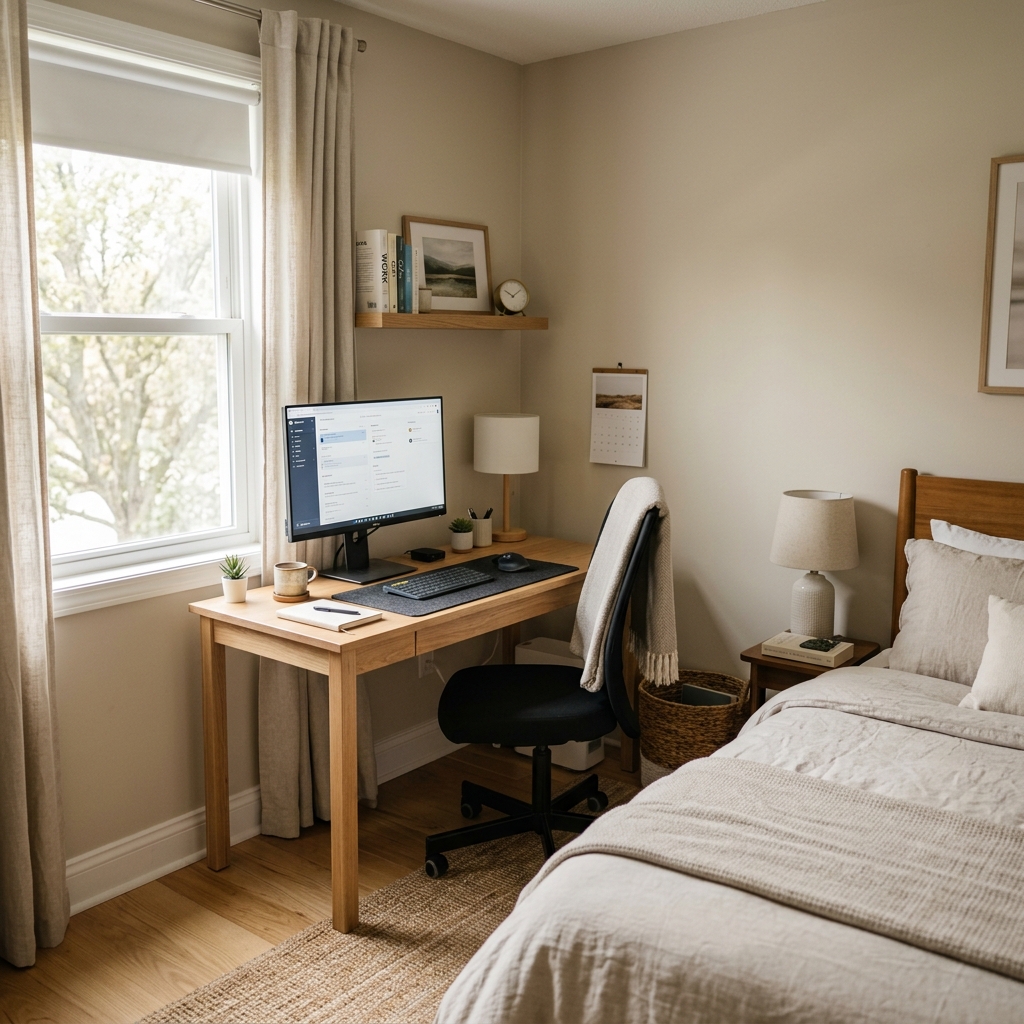 Start here
Under-Desk Cable Management Tray
Mount under your desk to hide the power strip and all trailing cables completely. The single biggest visual upgrade on any desk — clamp-on, no drilling, fully reversible. Buy this before anything else.
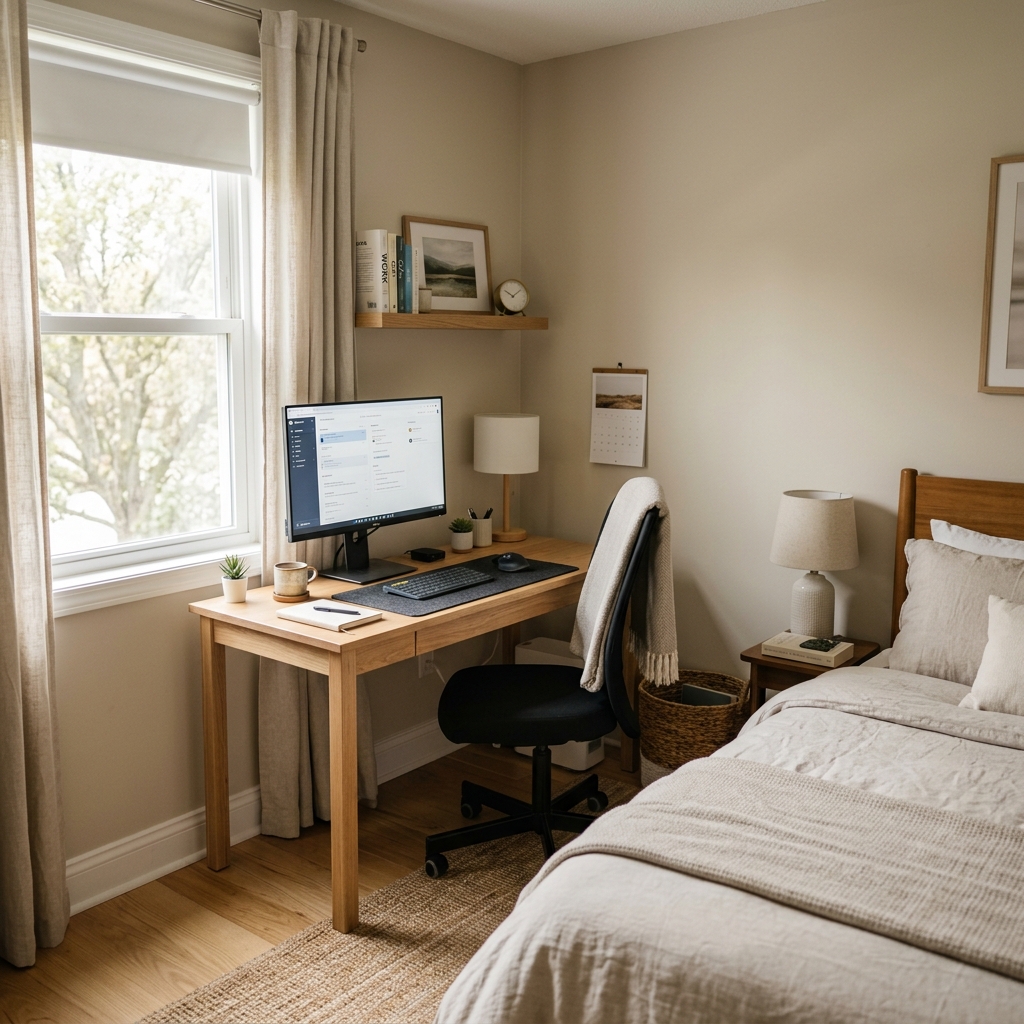 Define the zone
Large Desk Mat — Neutral Grey or Beige
A desk mat defines the work zone visually. Everything inside it belongs on the desk. When the mat is clear, the desk is tidy. A neutral 90×40cm mat in grey or beige works with any setup and any desk colour.
 Contain the clutter
Bamboo Desk Organiser with Compartments
Everything loose on your desk — pens, sticky notes, chargers — needs a fixed home. A divided bamboo organiser gives every item one. When things have a place, the desk stays clear without thinking about it.
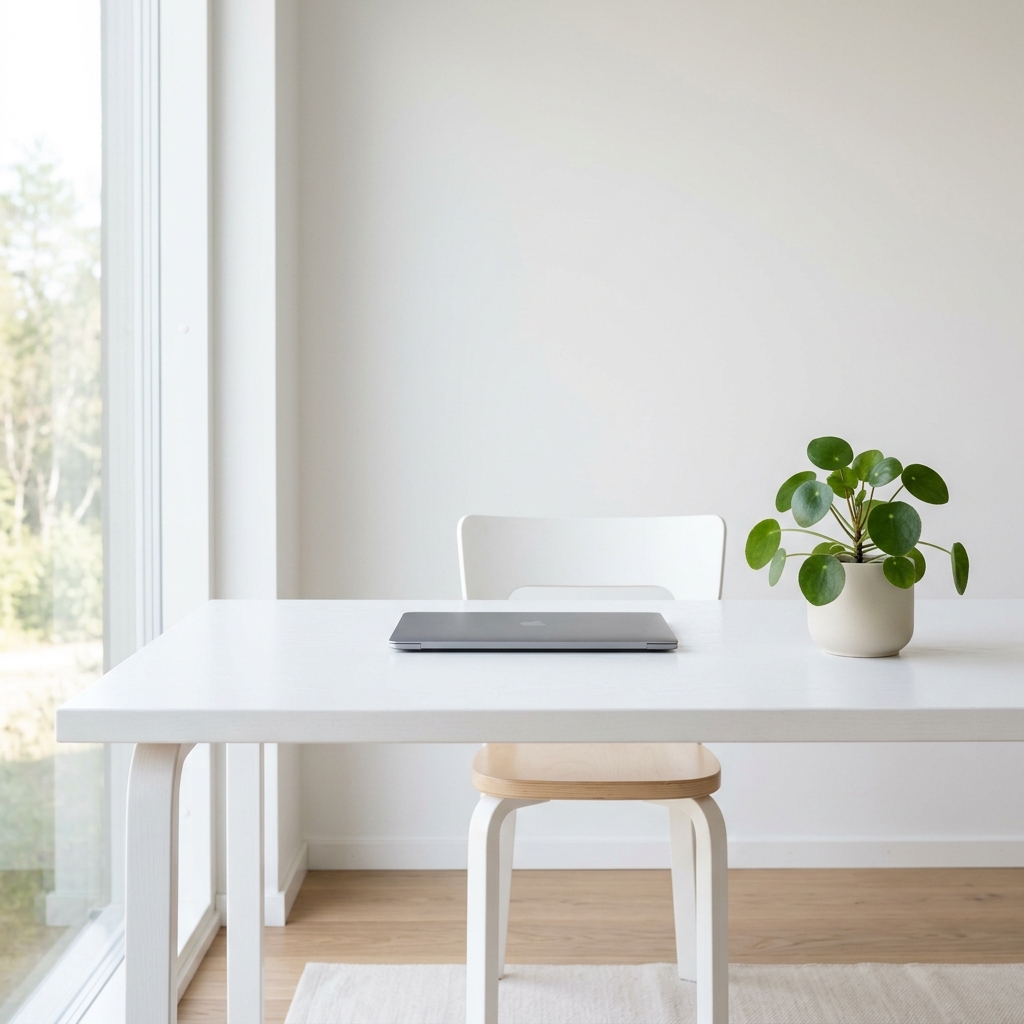 Hidden storage
Monitor Stand Riser with Drawer
Raises your screen to ergonomic height and creates a hidden drawer underneath for small daily items — headphones, charger, stationery. Off the surface, within reach. One product that solves two problems.
 Inside drawers
Stackable Drawer Organiser Set
For inside drawers: divides the space so nothing piles up. A stackable set organises stationery, cables, and accessories so opening the drawer doesn't undo your tidy desk. The finishing touch for the full system.
Related guides
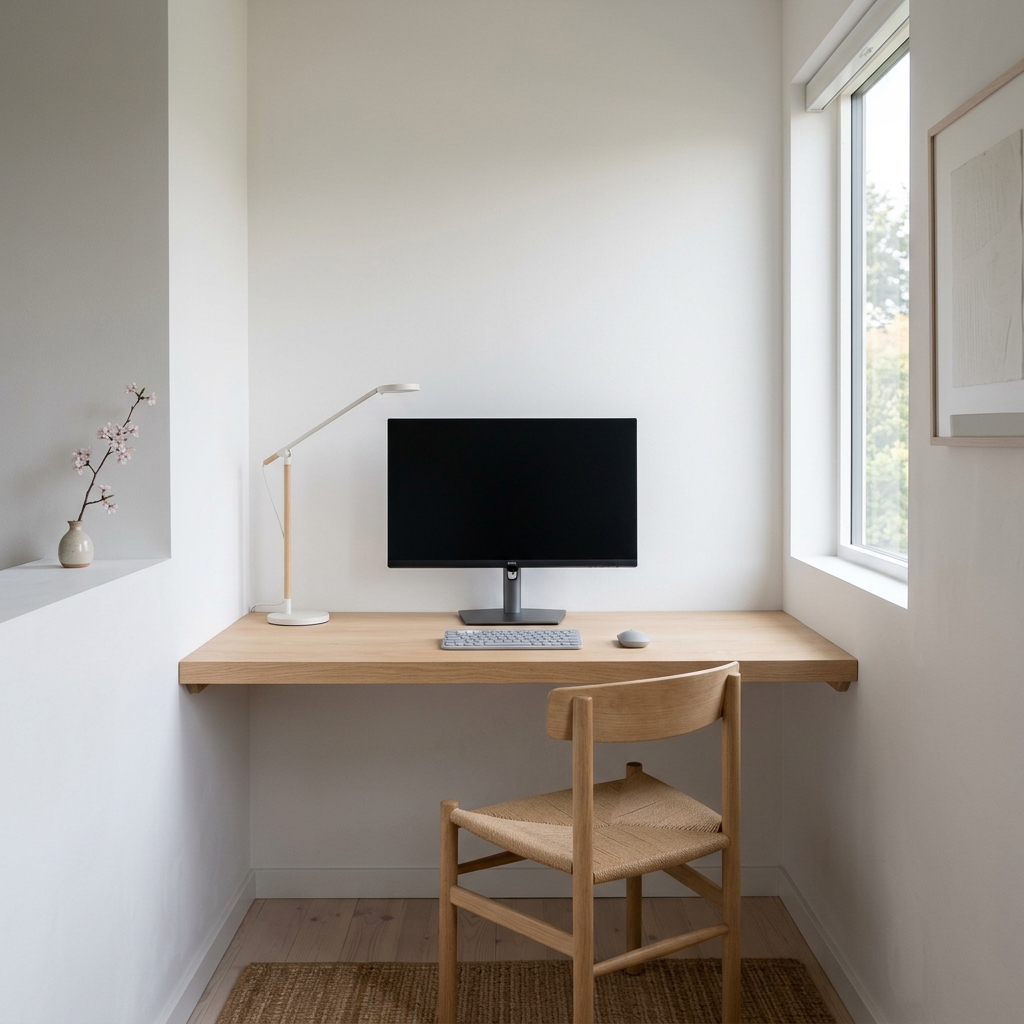
How to Organise a Small Desk
The step-by-step process — what to clear, what to buy, how to set it up.
Read →
Desk Storage Ideas for Small Rooms
Vertical storage, under-desk options, and wall shelving for compact spaces.
Read →
Best Desk Organisation Products
The products that actually solve desk clutter — hand-picked and linked to Amazon UK.
Read →